
Kinnaur Festival Guide: Raulane, Sazo, Mahotsav
Use this Kinnaur festival guide when you need the Kalpa/Raulane date, Sazo timing, or Kinnaur Mahotsav planning without guessing. It separates official dates from local ritual timing.
- 01Raulane Festival (Kalpa)
- 02Sazo / Sajo + Phagul (Suskar)
- 03National Tribal Festival (Oct 30-31)
- 04Kalpa — Raulane anchor village
- 05Reckong Peo — district HQ and gateway
Kinnaur's festival calendar runs on its own time. Raulane in Kalpa villages — men dressed as women dancing ritualistic forms at the deity temple, faces hidden under red gacchi masks — and the spring-arrival Sazo cycle when palanquins of the village gods are 'laid open' and temple doors closed are the headline traditions Kinnauri travellers and outsiders both flag. Late October adds the modern National Tribal Festival as a single-week showcase.
- Headline festivals
- Raulane (5-7 days at Kalpa, around Santang deity temple) and Sazo/Sajo + Phagul (Suskar) cycle through January-February. · Reddit traveller posts + local descriptions
- Modern showcase
- National Tribal Festival around Oct 30-31 — folk dances, wood carvings, woven textiles. The most outsider-accessible window. · Reddit (event description)
- Base
- Kalpa is the primary anchor village for Raulane. Reckong Peo is the district HQ + transit gateway. · Reddit
- Heads-up
- Mobile-data signal thins past Chitkul going east. Festival logistics that need real-time coordination need to be sorted before you leave the lower valley. · Reddit traveller (connectivity report)
What travellers actually figure out
- Raulane festival (Kalpa) is a 5-7 day ritual where men dress as women, called 'Raulane', and dance at the Santang or main deity temple to seek blessings for prosperity. The festival worships the 'Sauni' — spirits/fairies of the region.
- Within Raulane, the 'Raula' are the men playing the spirits — their faces completely covered with a red 'gacchi' mask, so no part of the body is visible. The dance happens at the Santang or main deity temple.
- Sazo / Sajo festival is celebrated through January and February (months of Magh and Falgun), marking the beginning of spring. During this period, 'the palanquins of the gods are laid open and the doors of temples are closed' — the local tradition holds that this is when the gods depart for the heavens for a short rest, and villagers spend the time cleaning and polishing temple floors.
- Phagul (also called Suskar) is named alongside Sazo as part of the spring cycle — both are tied to the seasonal departure-and-return of village deities, distinct from mainstream Hindu festival timing.
- Late October hosts the National Tribal Festival (around Oct 30-31), a modern showcase of Kinnauri folk dances, wood carvings, woven textiles and other tribal handicrafts. This is the year's most accessible window for outsiders attending a Kinnauri cultural event.
- Connectivity context for festival travellers: traveller reports describe usable mobile data in Chitkul and the lower Kinnaur valley, but the signal thins past Chitkul towards Kaza, and once you cross Losar village towards Chandrataal there is effectively none. Plan accordingly if you need to coordinate logistics during a festival.
- Cross-cultural note: Kinnaur's deity-led festival rhythm — palanquins, gurs holding the palkis, devta-rest cycles — is the same broad pattern documented across Mandi, Shimla and Kullu hill-village clusters, but the Kinnauri vocabulary (Sauni, Raula, Santang) and the gacchi-mask aesthetic are local.
Synthesised from Refuje's own research pipeline · paraphrased, never quoted
Specific places worth knowing
Raulane Festival (Kalpa)
5-7 day festival in Kalpa villages where men dress as women — the 'Raulane' — and dance ritualistic forms at the Santang or main deity temple to seek blessings for prosperity. Sauni (spirits/fairies) are the worshipped figures.
Sazo / Sajo + Phagul (Suskar)
The spring-arrival festival cycle, January-February (Magh-Falgun months). The palanquins of village gods are laid open, temple doors closed; tradition holds this is when the gods depart for the heavens for a short rest.

National Tribal Festival (Oct 30-31)
Modern showcase event held in Kinnaur around 30-31 October — focused on indigenous folk dances, intricate wood carvings, woven textiles and Kinnauri handicrafts.
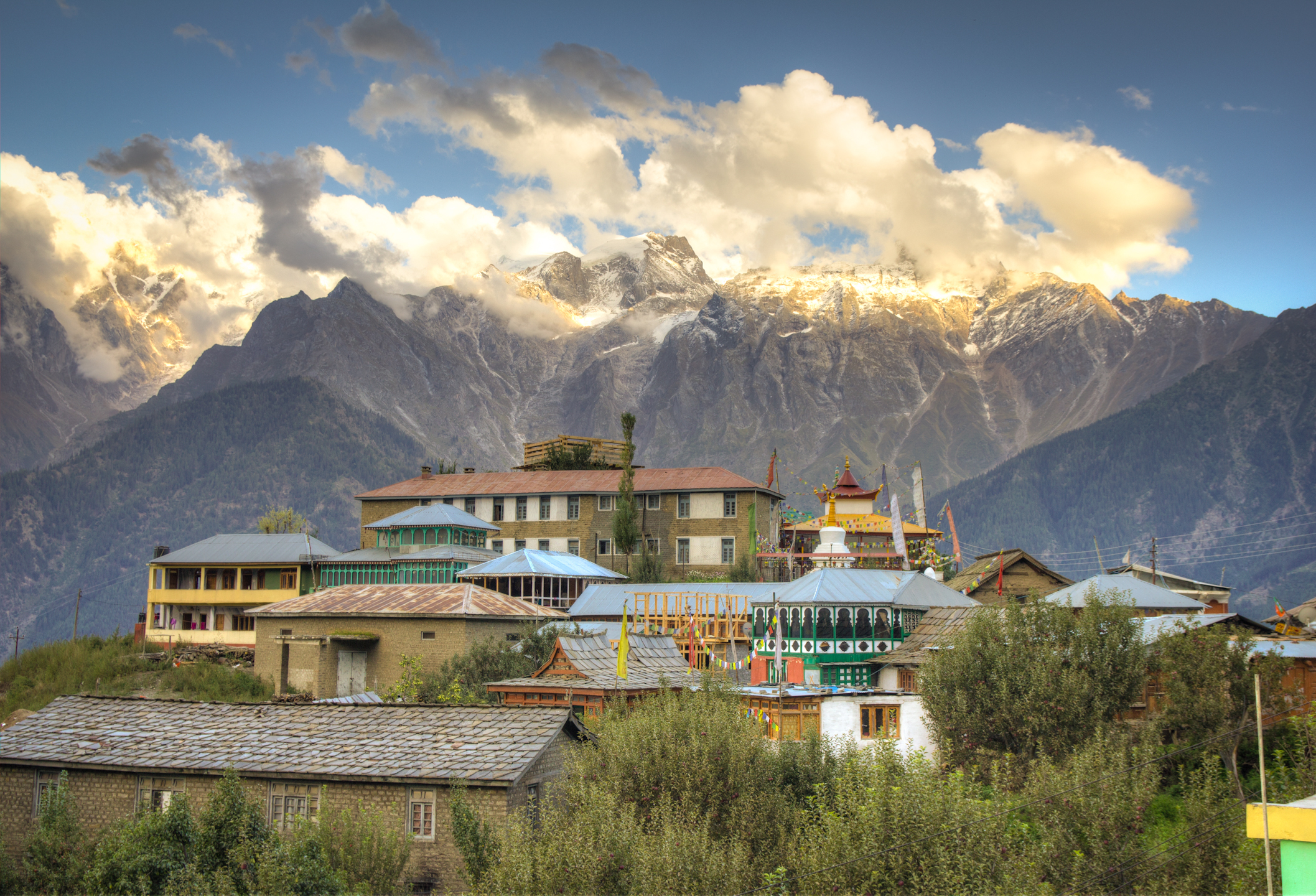
Kalpa — Raulane anchor village
Primary anchor for Raulane. The village's main deity temple (Santang) is the dance venue. Also one of Kinnaur's headline homestay bases — see the kinnaur × tribal-village deep guide for stay options.
Reckong Peo — district HQ and gateway
Kinnaur's district headquarters and transit gateway. Bus and shared-taxi connections to Kalpa, Sangla, Chitkul and Kaza-direction depart from here.
Cost and transport
- Shimla → Sangla → Kalpa by busDirect quoteHRTC operates the route; specific current fares vary by AC vs ordinary. Confirm at Shimla ISBT.
- Kalpa village homestay (festival window)Direct quoteDemand spikes during Raulane and the late-October showcase; book ahead rather than walk-in.
Bus + cab rates pulled from HRTC + Shimla Cart Road stand quotes, May 2026. Fuel estimate at ₹100/L on a Shimla circuit (~110 km round-trip).
When is the Raulane festival held?
Raulane runs for 5-7 days at the Santang or main deity temple in Kalpa villages. The exact dates shift with the local tantric calendar — check with a Kalpa homestay or the Reckong Peo transit office before committing dates.
What's the Sazo / Sajo cycle about?
It's the spring-arrival ritual, January-February. The palanquins of the village gods are laid open and the temple doors closed for the period — the local tradition is that the gods depart for the heavens for a short rest. Villagers clean and polish the temple floors during the gap. Phagul (Suskar) is its paired observance.
If I can only visit once, when should I go?
The National Tribal Festival window around 30-31 October is the most outsider-accessible Kinnauri cultural event — folk dances, wood carvings, woven textiles. The ritual festivals (Raulane, Sazo) are visit-able but expect minimal English-medium signage and infrastructure built for outsiders.
Are the masked Raula performers something I can photograph?
The Raula appear in red gacchi masks covering the entire face — they represent spirits, not entertainers. Treat them like any deity-procession photography: ask first at the Santang temple before pointing a camera, and respect any 'no photo' direction from the village priests.
Will mobile data work during festival travel?
Reasonable in Chitkul and the lower Kinnaur valley per recent traveller reports — even 4K YouTube streaming worked. Signal thins past Chitkul going east, and is effectively zero once you cross Losar village towards Chandrataal. Sort logistics in the lower valley first.
Where do I base myself?
Kalpa for the Raulane anchor; Reckong Peo as the transit hub if you want flexibility across Sangla / Chitkul / Kaza-direction. The kinnaur × tribal-village deep guide covers homestay specifics.
Kalpa
~9 km from the in-scope cluster

Tabo Monastery + village homestay
~57 km from the in-scope cluster

Dhankar
~58 km from the in-scope cluster